Your Google Business Profile Is Doing More Selling Than You Think
Your next customer may decide to call before they ever visit your website.
When a potential customer searches Google for a local service, they're often looking for more than a list of businesses. They're trying to figure out who they can trust, who can solve their problem, and who deserves their business.
And increasingly, that decision begins before they ever visit a website.
Your Google Business Profile plays a much bigger role in this process than many business owners realize. It's not simply a listing that helps your company appear in Google Maps or local search results. It's a digital first impression, a credibility checkpoint, and often a direct path to a phone call.
For service businesses, that makes your profile an important part of the sales process.
The real opportunity isn't just being visible. It's turning that visibility into customer confidence and action.
Your Google Business Profile Is Often the First Sales Conversation
Imagine a homeowner searching for an HVAC company, plumber, electrician, or landscaping service.
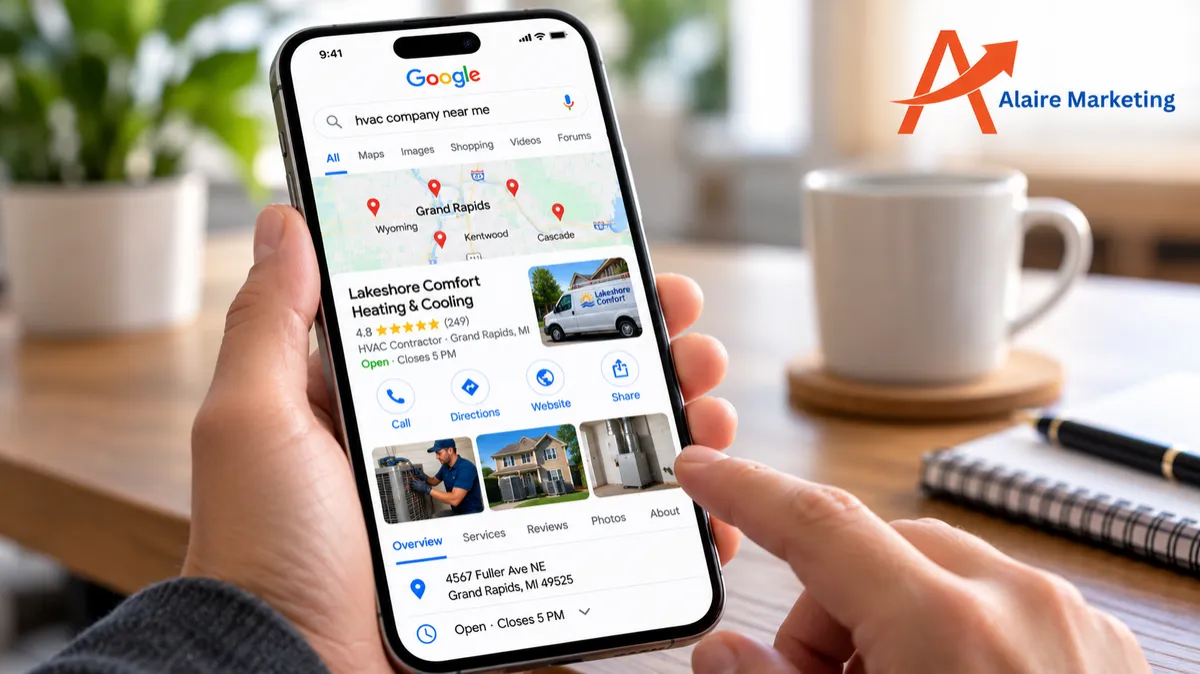
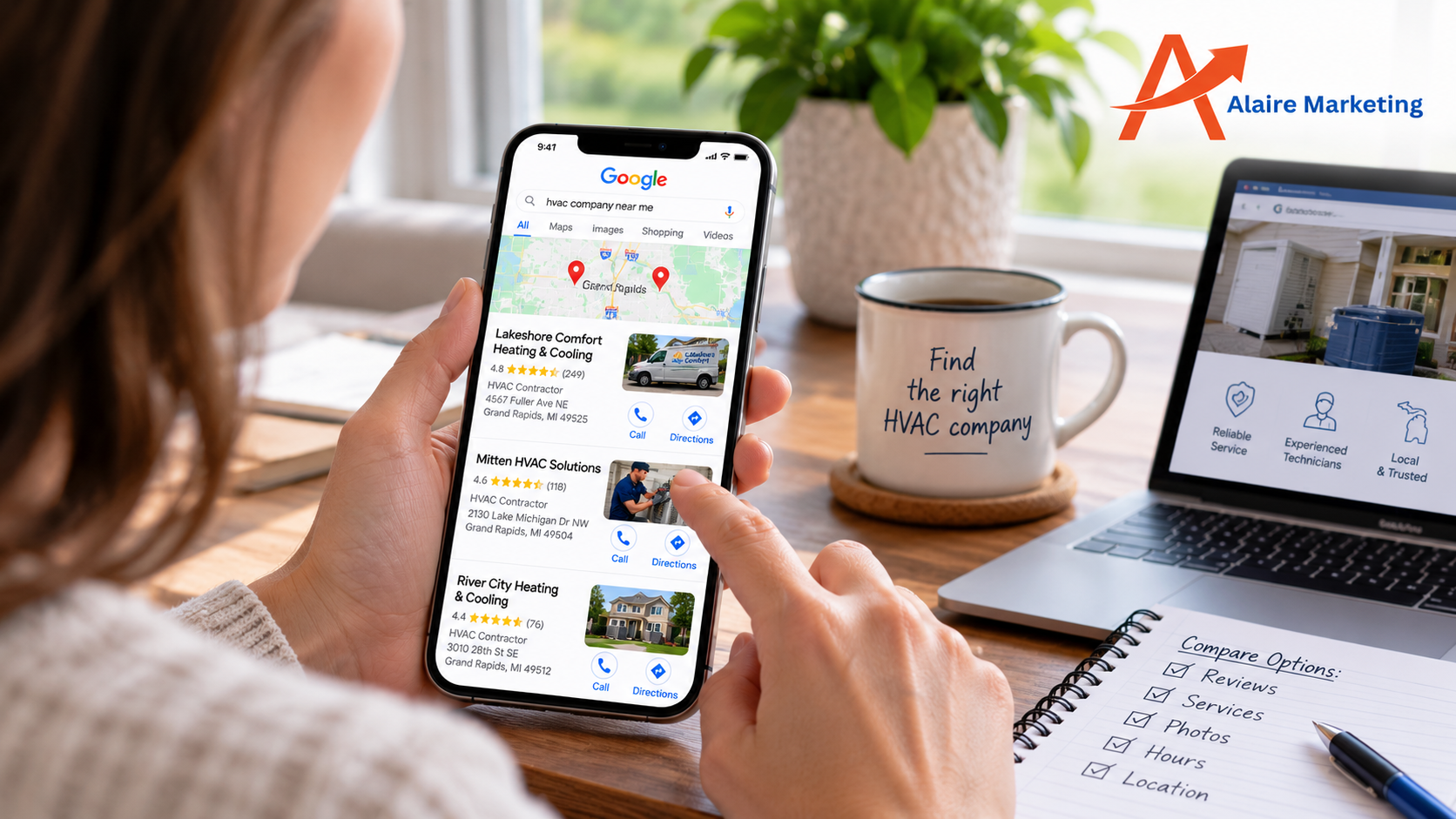
They type a service-related search into Google and see several nearby businesses. Before clicking a website, they can already evaluate important information:
How many reviews does each business have?
What do customers say about their experiences?
Are there photos of completed projects?
Does the company offer the service they need?
Are the business hours and contact information clear?
Does the business appear active, professional, and trustworthy?
Each detail helps shape the customer's perception.
Your Google Business Profile is essentially answering questions and addressing concerns before your team ever speaks with the prospect.
A complete, well-maintained profile can reinforce professionalism and make contacting your business feel like a safer decision.
An incomplete or neglected profile can create uncertainty, even when the company itself provides excellent service.
That's why effective local SEO must account for more than where your business appears. It must also consider what happens after someone finds you.
Customers Are Evaluating Your Business Before Visiting Your Website
Many businesses invest heavily in their websites while overlooking how much customer evaluation happens directly within Google's search experience.
A prospective customer may compare several businesses using their Google Business Profiles alone.
They can review ratings, read customer feedback, browse photos, check service information, and access contact details without visiting a traditional website.
This doesn't make your website less important. It means your website and Google Business Profile have different responsibilities within the same customer journey.
Your profile helps customers discover and evaluate your business quickly. Your website provides additional depth, reinforces your expertise, and supports customers who want more information before making a decision.
Both should communicate a consistent message.
For example, if your website emphasizes dependable emergency plumbing services but your Google Business Profile provides little information about those services, potential customers may not immediately recognize your relevance.
Likewise, if your website showcases high-quality project photography but your profile contains outdated or limited images, you're missing an opportunity to demonstrate that same credibility earlier in the buying process.
The goal is to make every customer touch-point work together, not treat each platform as a separate marketing activity.
Reviews Aren't Just Reputation Signals. They're Conversion Assets.
Online reviews are often discussed as a component of local SEO, but their influence extends beyond search visibility.
Reviews help prospective customers evaluate the experience they might have with your business.
For service companies, where customers may be inviting someone into their home or making a significant financial commitment, that reassurance matters.
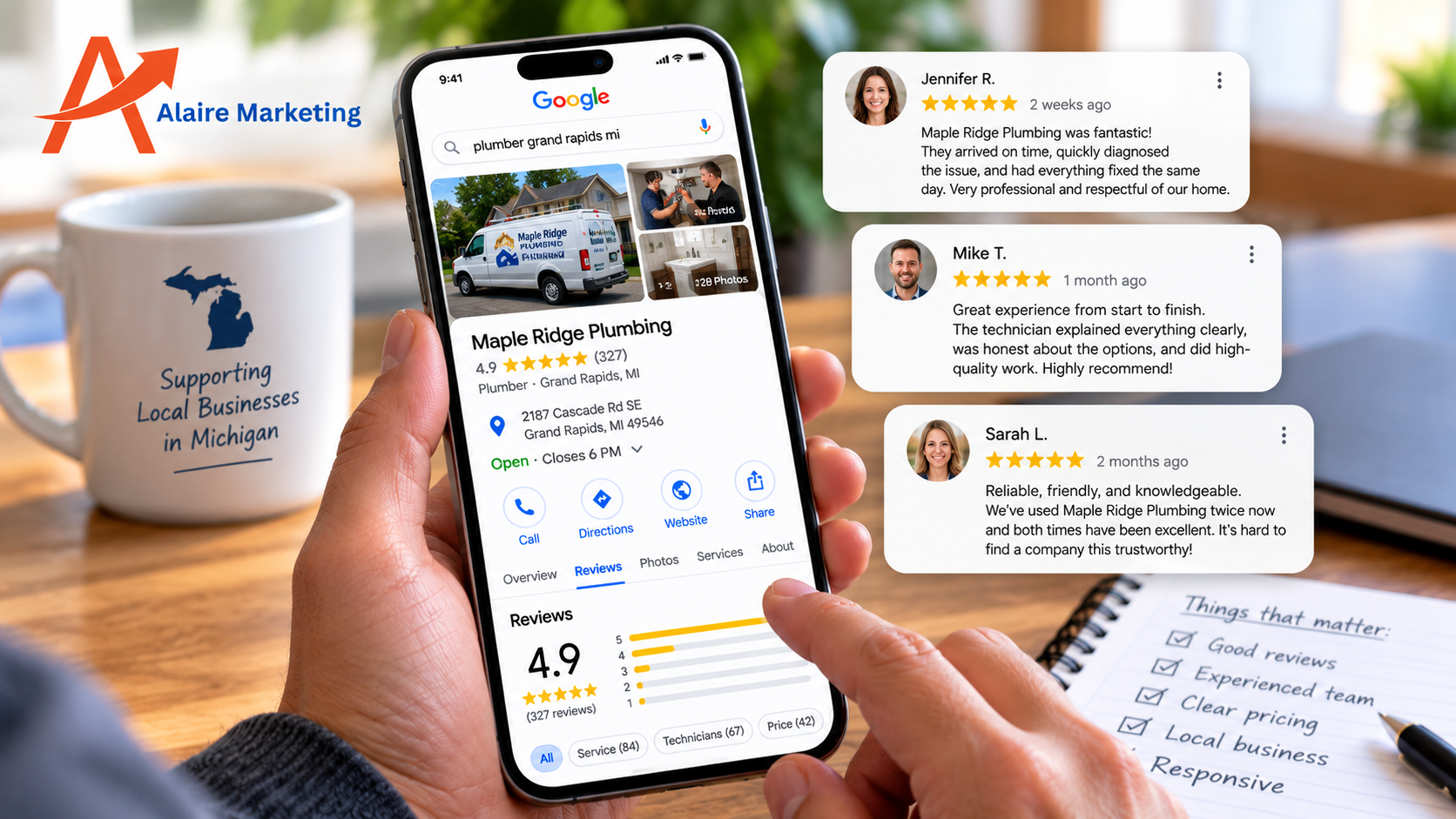
Consider the difference between a generic five-star rating and a detailed customer review describing a technician who arrived on time, explained the repair, respected the property, and completed the work professionally.
Both are positive. But the detailed review gives a prospective customer specific reasons to feel confident.
Reviews can help communicate qualities that are difficult to establish through advertising alone, including reliability, responsiveness, professionalism, and quality of service.
How your business responds to reviews also contributes to the impression customers form.
Thoughtful responses to positive feedback demonstrate appreciation. Professional responses to criticism show how your company handles concerns.
A strong review strategy isn't about manufacturing a perfect reputation. It's about encouraging genuine customer feedback and demonstrating that your business takes customer experiences seriously.
When viewed this way, reviews become an important part of the conversion process, not simply another marketing metric.
Photos and Business Information Help Reduce Customer Hesitation
Customers want evidence that a business is legitimate, capable, and relevant to their needs.
Photos and accurate business information help provide that evidence.
For a roofing company, images of completed installations may demonstrate workmanship. For a landscaping business, before-and-after photos can communicate the quality of its results. For a cleaning company, professional team photos and examples of completed work may help establish confidence.
The most useful images aren't necessarily the most polished. They're the ones that help potential customers understand what your business does and what they can expect.
The same principle applies to your business information.
Accurate hours, relevant services, correct contact details, and appropriate business categories make it easier for customers to determine whether you're a suitable option.
These details may seem administrative, but they directly influence the customer experience.
If someone needs an urgent service and can't determine whether your business is available, they may move on to a competitor.
If your profile clearly communicates what you offer and how to contact you, you've removed unnecessary friction from the decision.
Good Google Maps marketing isn't only about attracting attention. It's also about making the next step obvious and easy.
Local Visibility Is Only Valuable When It Leads Somewhere
One of the most common misconceptions about local search is that better rankings automatically mean better business results.
Rankings matter because visibility creates opportunities. But visibility alone doesn't guarantee that someone will choose your company.
Think about the customer journey:
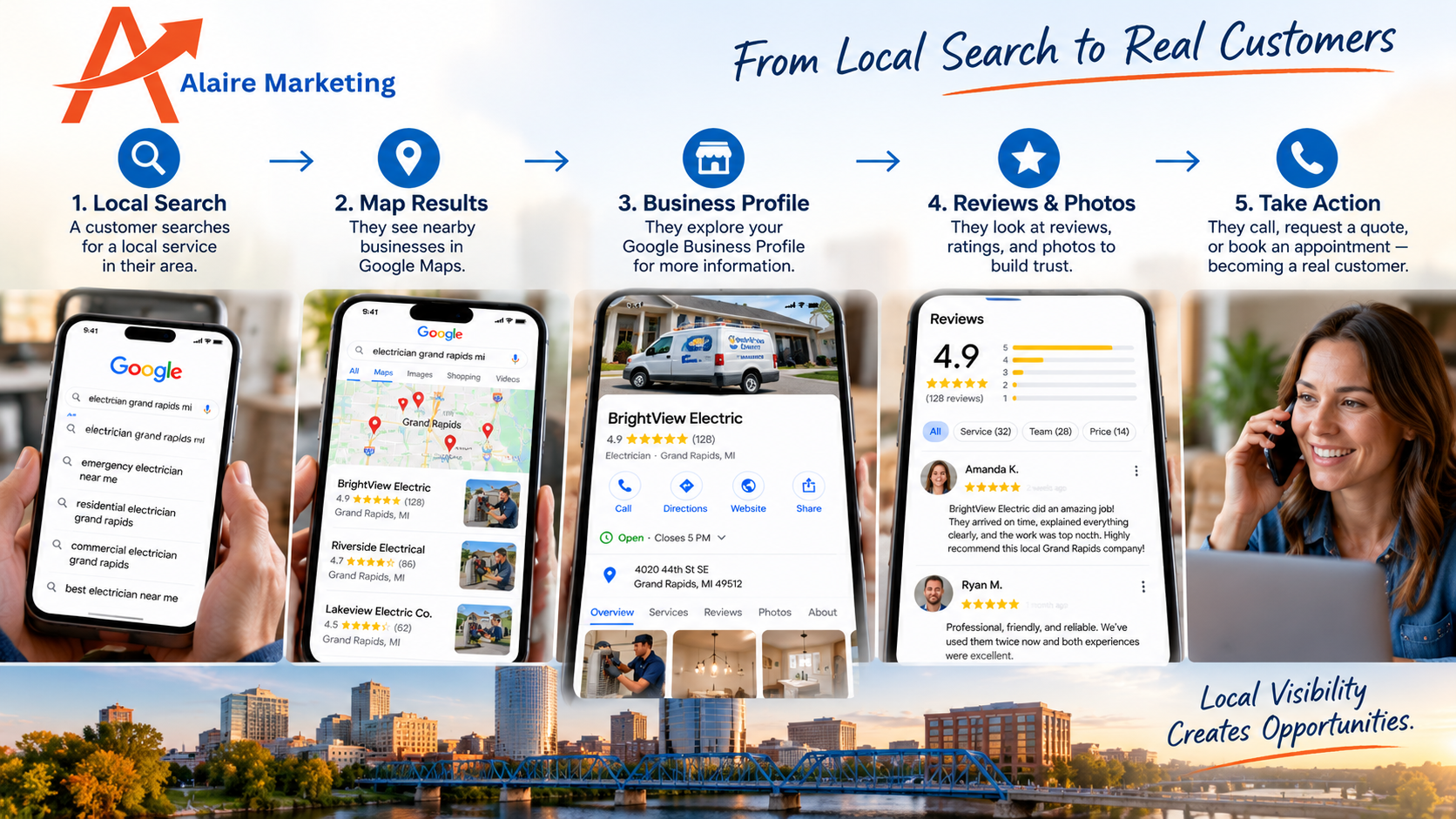
Local search → Google Maps listing → Business profile → Reviews and photos → Phone call or appointment
Every stage has a purpose.
Appearing in search gives your business an opportunity to be considered. Your profile provides information that helps the customer evaluate you. Reviews and visual content establish credibility. Clear contact options make it easier to take action.
If any of these elements are weak, potential customers may leave before making contact.
For example, a company could appear prominently in Google Maps but receive fewer inquiries than expected because its profile doesn't clearly communicate its services or provide compelling evidence of customer satisfaction.
Another company may have a strong eputation but lose opportunities because its phone number, business hours, or service information is inaccurate.
This is why service business SEO should be connected to customer acquisition, not measured exclusively through keyword rankings.
The more meaningful question isn't simply, "Where does our business rank?"
It's, "Are the right customers finding us, trusting what they see, and taking the next step?"
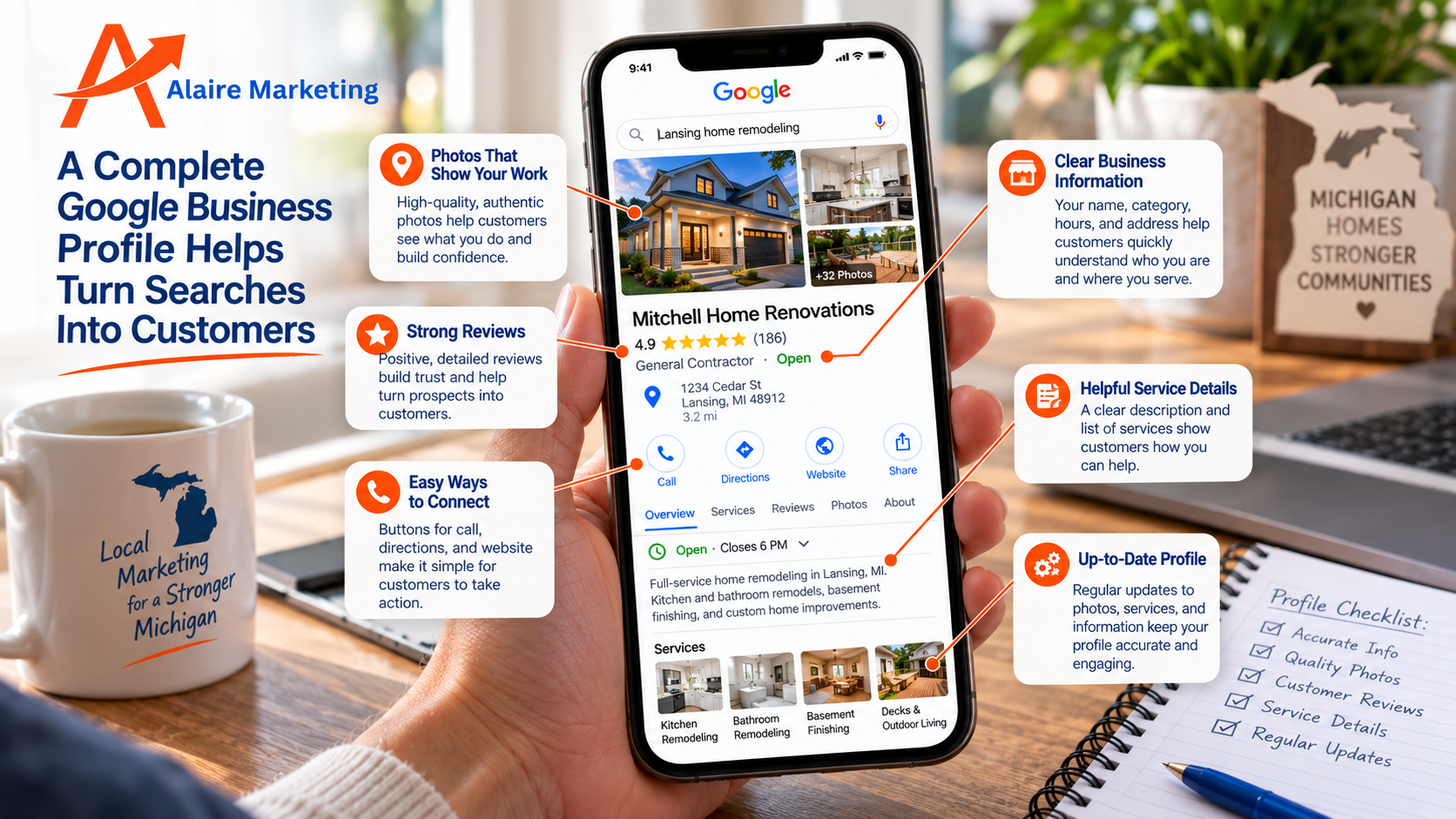
What a Conversion-Focused Google Business Profile Should Include
A strong profile should help customers answer three fundamental questions:
Can this company help me? Can I trust them? How do I contact them?
That requires attention to several important areas.
1. Accurate and Complete Business Information
Keep your business name, contact information, hours, categories, and service details current. Customers should be able to understand what you offer without searching for basic information.
2. Relevant, High-Quality Photos
Use authentic images that represent your services, team, completed work, or business location when appropriate. Focus on helping customers visualize the experience and results your company provides.
3. Consistent Customer Review Management
Develop a process for requesting honest reviews from customers and responding professionally to feedback. Consistency is more sustainable than occasional bursts of activity.
4. Clear Service Descriptions
Describe your core services accurately and in language customers understand. Your profile should reinforce the services you're actively trying to attract customers for.
5. Easy Paths to Contact Your Business
Make sure customers can reach the correct phone number, visit your website, and use any relevant contact or booking features available to your business.
6. Regular Profile Maintenance
Review your information periodically, update applicable hours, add useful new photos, and address outdated content. A profile should reflect the business customers can expect to encounter today.
None of these improvements requires treating your profile as a standalone marketing campaign.
Instead, they should support the larger goal of creating a consistent, trustworthy customer experience across every stage of the buying journey.
Measure More Than Rankings to Understand What's Working
If your only measure of local SEO success is whether your business appears higher in search results, you're seeing only part of the picture.
Google Business Profile performance data can provide insight into how customers interact with your listing, including available metrics for calls, website clicks, directions, and other interactions.
These metrics can help you understand whether visibility is creating opportunities for customer engagement.
But there's an important distinction: an interaction isn't necessarily a completed sale.
A phone call may be a qualified lead, an existing customer, or an unrelated inquiry. A website click may result in a booked appointment, or it may not.
For a more meaningful assessment, businesses should connect profile activity with lead tracking, appointment requests, and actual customer outcomes whenever possible.
This provides a clearer view of whether your local search presence is contributing to business growth.
It's also important to recognize that not every improvement in calls or inquiries can be attributed to a single profile update. Seasonality, competition, advertising, customer demand, and other factors can influence results.
The objective is to make better marketing decisions using a combination of visibility, engagement, and business-performance data.
Your Google Business Profile Should Support the Entire Customer Journey
Your Google Business Profile isn't a replacement for your website, your reputation, or your broader marketing strategy.
It's a critical connection point between them.
When someone discovers your company through local search, the information they encounter can influence whether they continue researching, visit your website, call your business, or choose a competitor.
That makes your profile more than a place to maintain contact information.
It's part of how your business communicates value, demonstrates credibility, and helps potential customers move toward a decision.
Businesses that treat their profiles as active customer-acquisition assets are better positioned to make the most of the visibility they've earned.
Because appearing in search is only the beginning.
What customers see next is what helps turn visibility into opportunity.
Is Your Google Business Profile Helping Customers Choose You?
Your business may already be appearing in local search results. But is your profile giving potential customers enough confidence to take the next step?
At Alaire Marketing, we believe local visibility should support real business opportunities, not just better rankings.
Understanding how your Google Business Profile contributes to customer trust, inquiries, and conversions is an important step toward building a more effective local marketing strategy.
Find Out If Your Google Business Profile Is Turning Visibility Into Leads
Discover where your local search presence may be creating opportunities—and where potential customers could be slipping away.