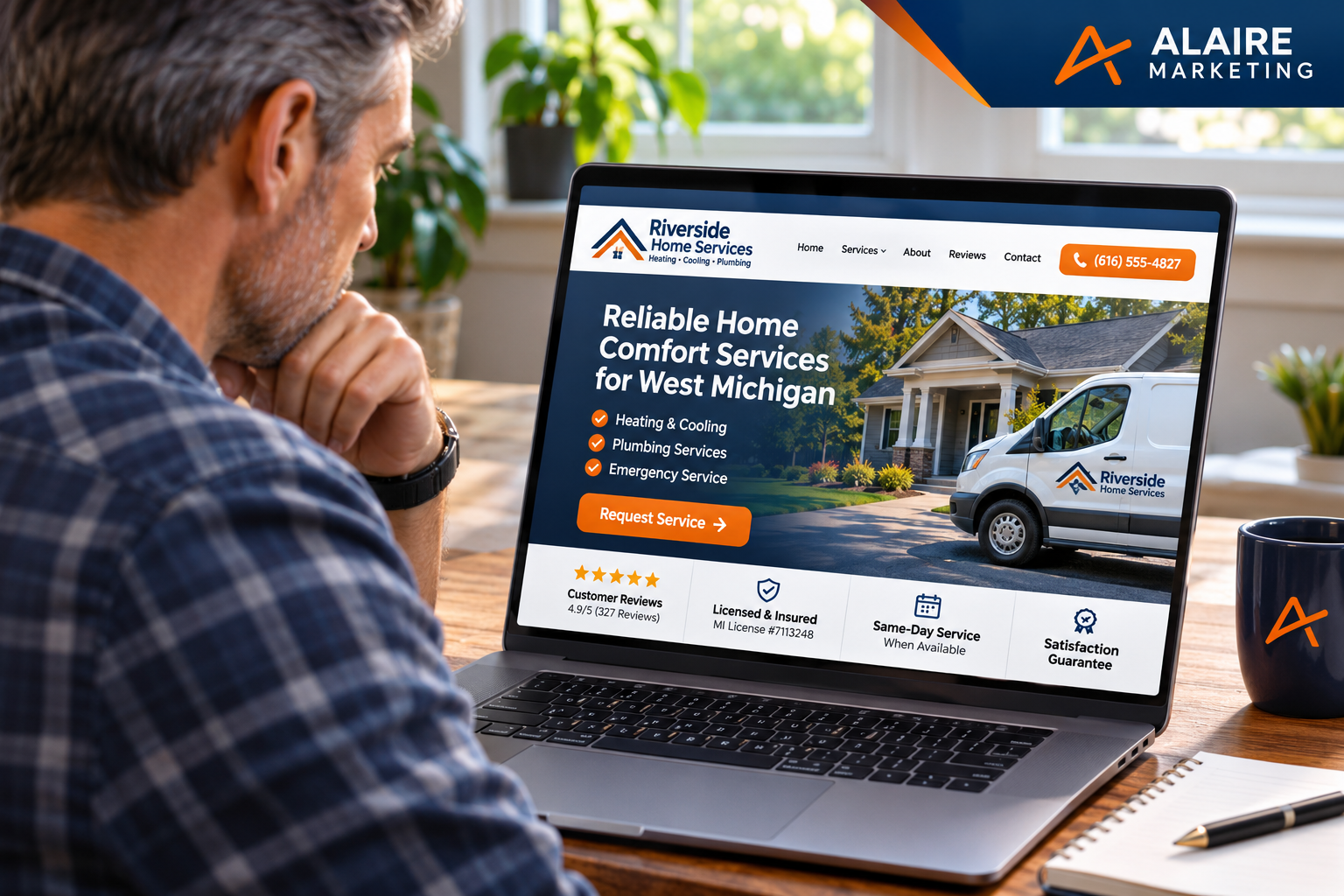
The Hidden Cost of a Website That Doesn't Build Trust
Your website doesn't have to look broken to lose business. Sometimes, the biggest revenue leaks are the doubts visitors never tell you about.
A potential customer searches for a service your business provides. They find your company, click through to your website, and begin evaluating whether you're the right choice.
Your business might have years of experience, skilled employees, and an excellent reputation.
But the visitor doesn't know that yet.
All they have is what your website communicates.
If your website looks outdated, provides unclear information, lacks credibility signals, or makes it difficult to take the next step, that prospective customer may leave without ever contacting you.
And you'll probably never know why.
That's the hidden cost of a website that doesn't build trust.
For established service businesses, website trust isn't simply a design consideration. It's an important part of customer acquisition, lead generation, and revenue performance.
Your Website Gets Judged Before Your Business Does
When prospective customers visit a service business website, they're evaluating more than the services offered.
They're looking for reassurance.
Can this company solve my problem? Is it experienced? Does it serve my area? Can I trust its employees? What happens if something goes wrong?
A well-structured website helps answer those questions before a visitor needs to ask them.
A poorly structured website creates additional uncertainty.
Consider two plumbing companies offering similar services.
The first has an outdated website with limited service descriptions, no visible customer reviews, generic photography, and a contact form buried several pages deep.
The second has a professional website featuring clear service information, authentic customer feedback, photographs of completed work, visible contact options, and straightforward explanations of what customers can expect.
Even if both companies provide equally good service, their websites communicate different levels of credibility.
The second company gives prospective customers more reasons to feel confident taking the next step.
Your website is often making an impression before your team has an opportunity to make one.
The Five-Second Trust Decision: What Visitors Notice First

Visitors don't necessarily examine every page of your website before forming an initial impression.
They begin evaluating credibility almost immediately.
The idea of a five-second trust decision is a useful reminder that first impressions happen quickly, although there is no universal five-second rule for every visitor.
Several elements can influence that initial evaluation.
Professional appearance and consistency
A modern, organized website suggests attention to detail.
That doesn't mean every service business needs elaborate animations or expensive visual effects.
Clean layouts, readable typography, consistent branding, and professional imagery can communicate credibility more effectively than unnecessary design complexity.
Clear service information
Visitors should quickly understand what your business does, whom it serves, and where it operates.
If someone needs emergency HVAC repair, they shouldn't have to navigate through several unrelated pages to determine whether your company provides that service.
Visible contact information
Phone numbers, contact forms, and appointment options should be easy to find, particularly on mobile devices.
A visitor who is ready to call shouldn't have to search for a way to contact you.
Evidence of credibility
Customer reviews, relevant credentials, licensing information, completed projects, and service guarantees can help establish confidence when they're accurate and applicable.
Together, these elements contribute to a website experience that feels professional, transparent, and trustworthy.
Why Website Traffic Doesn't Automatically Become Leads
Many service businesses invest in SEO, Google Ads, social media, and other marketing channels to attract more visitors.
Increasing website traffic can create valuable opportunities.
But traffic alone doesn't guarantee inquiries.
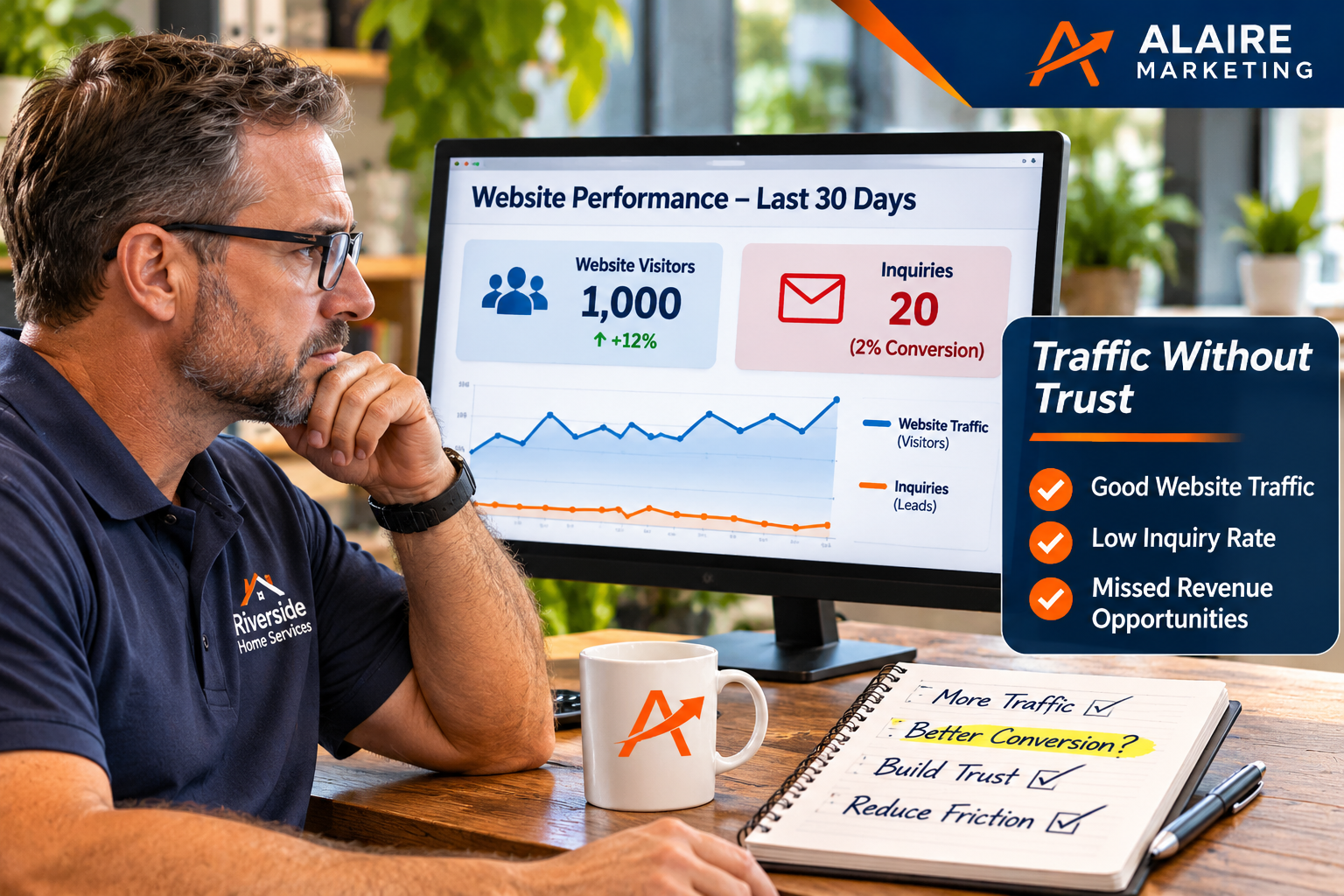
Imagine your website receives 1,000 visitors in a month.
If 2% submit an inquiry, that's 20 inquiries.
If improvements to your website experience increase that rate to 3%, the same traffic would generate 30 inquiries.
This is why conversion rate optimization deserves attention alongside traffic generation.
Improving website conversion doesn't always require attracting more visitors. Sometimes it means reducing the friction preventing existing visitors from taking action.
Common conversion barriers include confusing navigation, slow-loading pages, vague messaging, weak calls to action, and unnecessary form fields.
Other problems are less obvious.
A website might look attractive but fail to explain why customers should choose the business. It might generate inquiries that aren't properly tracked. Or its mobile experience might make calling unnecessarily difficult.
Each issue can reduce the value of marketing investments already bringing visitors to the site.
Trust Signals That Help Turn Visitors Into Customers

Effective website design should help prospective customers move from uncertainty toward confidence.
For a service business website, that requires more than an attractive homepage.
It requires credible information that addresses the questions and concerns customers have before making contact.
Authentic customer reviews and testimonials
Customer feedback helps prospects understand what working with your company may be like.
Detailed reviews describing professionalism, responsiveness, workmanship, and customer service can be particularly helpful.
Use genuine testimonials with appropriate permission rather than fabricated endorsements or misleading claims.
Licensing, credentials, and professional qualifications
Where applicable, clearly displayed licensing information, certifications, insurance details, and professional affiliations can provide reassurance.
These details should be current, accurate, and relevant to the services offered.
Real project photography
Photographs of completed projects, service vehicles, team members, and actual work environments can make your business feel more tangible.
For many service businesses, authentic imagery communicates more than generic stock photography.
Clear expectations
Explain your service process.
Let visitors know what happens after they submit a form, request an estimate, or schedule an appointment.
When customers understand the next step, contacting your business can feel less uncertain.
Strong, relevant calls to action
A lead generation website should guide visitors toward an appropriate action.
That might mean calling for emergency service, requesting a quote, scheduling a consultation, or submitting project details.
The right CTA depends on the visitor's needs and the type of service being offered.
Trust isn't created by one badge, testimonial, or button. It's built through a consistent experience.
What Your Website Must Accomplish Beyond Looking Professional
A successful service business website has several responsibilities.
First, it must attract relevant visitors through search visibility, advertising, referrals, or other marketing channels.
Second, it must communicate the business's value clearly enough for visitors to understand whether its services meet their needs.
Third, it must establish credibility through relevant information and evidence.
Fourth, it must make contacting the company straightforward.
Finally, it must support the operational systems responsible for handling those inquiries.
This last requirement is frequently overlooked.
A website can have an excellent conversion experience and still underperform commercially if incoming leads aren't routed correctly or followed up consistently.
For example, a customer may complete a contact form, but the notification goes to an inbox nobody monitors.
Another visitor may call after business hours without receiving a useful next step.
A third prospect might request an estimate but never receive follow-up.
These aren't purely website design problems.
They're customer-acquisition and revenue-process problems.
That's why effective website strategy should consider technical performance, lead routing, automation integration, and the relationship between marketing activity and business outcomes.
Two Websites, Two Different Business Outcomes
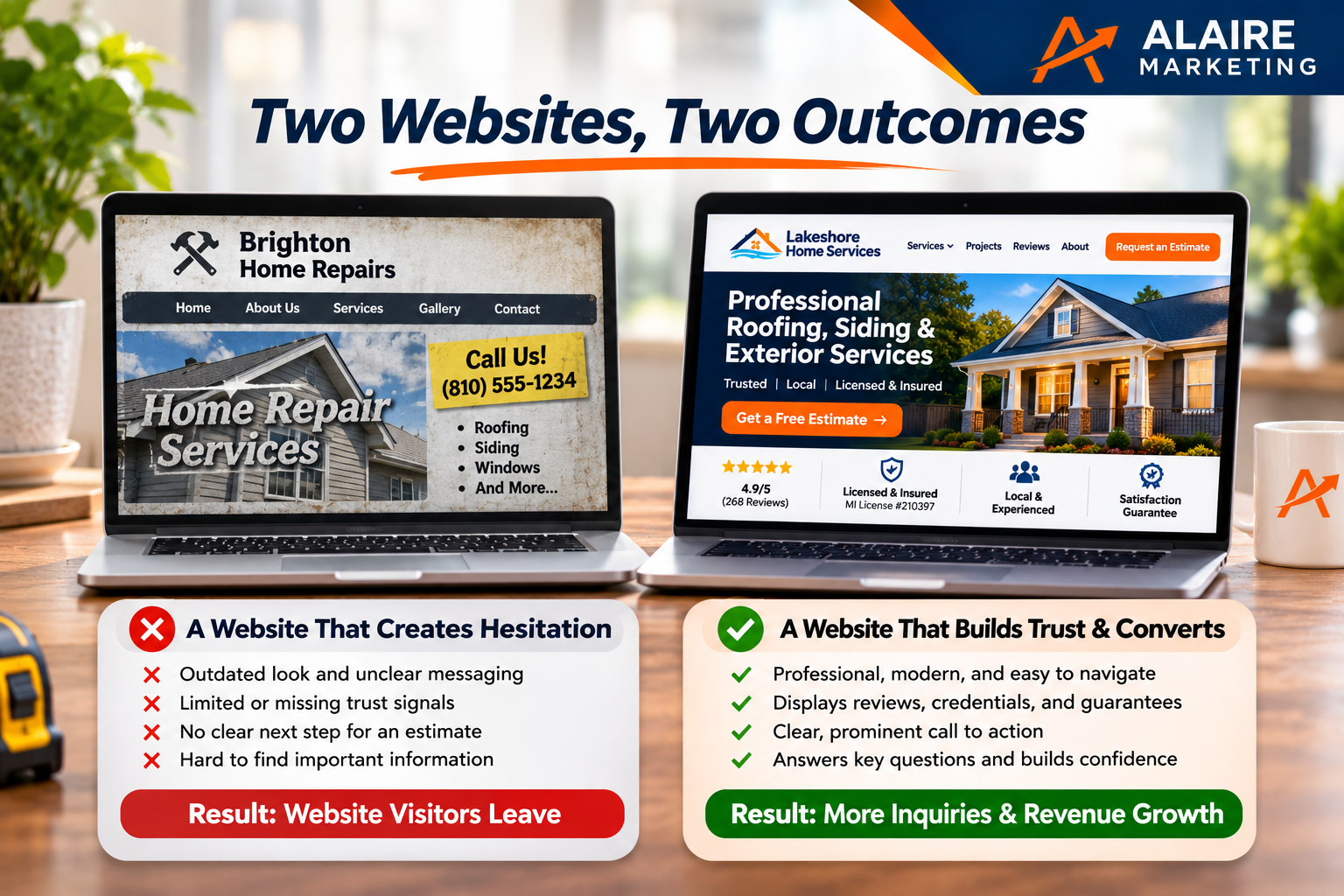
Consider two established home-service companies operating in the same market.
Both have strong technicians, competitive service offerings, and marketing budgets designed to generate demand.
Company A has a website that receives traffic but makes visitors work to find information. Its service pages are vague, its credibility signals are limited, and its contact process is cumbersome.
Company B has a website that clearly explains its services, demonstrates relevant experience, displays authentic customer feedback, and makes contacting the company simple.
Company B also has a defined process for capturing, routing, and following up on inquiries.
Neither company is guaranteed to win every customer.
But Company B has reduced several avoidable barriers between customer interest and action.
That's the distinction between treating a website as a digital brochure and treating it as part of a revenue-supporting business system.
The objective isn't simply to make a website look better.
It's to help the website perform better at the job the business needs it to do.
The Hidden Revenue Cost of Website Friction
When a visitor leaves without contacting your company, you generally can't determine the exact reason from analytics alone.
But you can investigate patterns.
Are visitors abandoning important service pages? Are mobile visitors struggling to complete forms? Are phone-call clicks occurring without corresponding answered calls? Are qualified inquiries reaching the right people?
These questions help connect website performance with customer-acquisition outcomes.
A structured evaluation can identify potential problems across the visitor journey, including:
Website speed and technical performance.
Service messaging and conversion flow.
Mobile usability and contact accessibility.
Lead capture and routing.
Follow-up processes and automation.
Measurement of inquiries and downstream results.
Not every business needs a complete website redesign.
Sometimes targeted structural improvements are more appropriate.
Other businesses may discover that their website requires deeper changes to support their growth objectives.
The important step is identifying the actual problem before investing in a solution.
Your Website Should Build Trust — Not Cost You Customers
Your website is more than an online representation of your business.
It's often the first place prospective customers evaluate whether you're credible, capable, and worth contacting.
When website trust is weak, visitors may hesitate.
When navigation is confusing, they may leave.
When conversion systems are disconnected, valuable inquiries may never become sales opportunities.
And when those problems remain unexamined, businesses can continue investing in traffic without addressing what happens after visitors arrive.
For established service businesses, the goal should be a website that supports credibility, qualified inquiries, and measurable growth.
Because a website that looks professional is valuable.
A website that helps your business earn trust and convert opportunities is far more valuable.
Ready to Evaluate Whether Your Website Supports Revenue Growth?
Your Website Should Build Trust — Not Cost You Customers
Your website may be attracting visitors, but is it giving them the confidence to take the next step?
Unclear messaging, weak trust signals, confusing navigation, and poor conversion structure can create hesitation before a prospect ever contacts your business.
At Alaire Marketing, we believe your website should do more than look professional. It should support customer confidence, qualified inquiries, and measurable business growth.
Our Website & Revenue Structure Strategy Call helps established service businesses evaluate website conversion flow, technical performance, lead routing, and revenue alignment.