The Revenue Leak Nobody Sees - Alaire Marketing
The estimate wasn’t the end of the sales process. It was the moment your follow-up mattered most.
Your marketing is working.
The phone is ringing. Forms are being submitted. Estimates are going out. Your CRM has leads in it. Your team is busy.
So why doesn’t revenue always reflect the amount of opportunity coming into the business?
Most owners start looking in familiar places.
Maybe we need more traffic.
Maybe lead quality is down.
Maybe the ads aren’t working.
Maybe we need to spend more.
But there’s another possibility:
You’re already generating enough opportunity. You’re just not converting enough of it into revenue.
That’s the revenue leak nobody sees.
It doesn’t arrive as an invoice. It doesn’t show up as a line item in your P&L. There’s no monthly statement telling you how much money disappeared because a call wasn’t answered, a lead waited too long for a response, or an estimate never received another follow-up.
The opportunity simply vanishes.
Revenue Leakage Is Different From an Expense
When you spend $5,000 on advertising, you can see the $5,000 expense.
When a qualified lead calls and nobody answers, the financial impact is harder to see.
You didn’t technically lose $5,000.
You lost the opportunity to convert that inquiry into revenue.
Multiply that across missed calls, delayed responses, forgotten estimates, inconsistent follow-up, stalled opportunities, and dormant leads, and the numbers can become meaningful.
That’s why revenue leakage is so dangerous.
Businesses tend to manage what they can see.
Ad spend is visible.
Website traffic is visible.
Lead counts are visible.
Sales are visible.
The gaps between those numbers often aren’t.
The Lead Came In. Then What?
Generating the lead is only the beginning.
Imagine a service business generates 100 inquiries this month.
Management sees 100 leads and thinks marketing did its job.
But what happened next?
How many calls were answered?
How quickly were web inquiries contacted?
How many leads received multiple contact attempts?
How many appointments were scheduled?
How many estimates were delivered?
How many estimates received consistent follow-up?
How many opportunities were actually won or lost for a documented reason?
If you can’t answer those questions, you don’t have complete visibility into your revenue process.
You know what entered the funnel.
You know what came out.
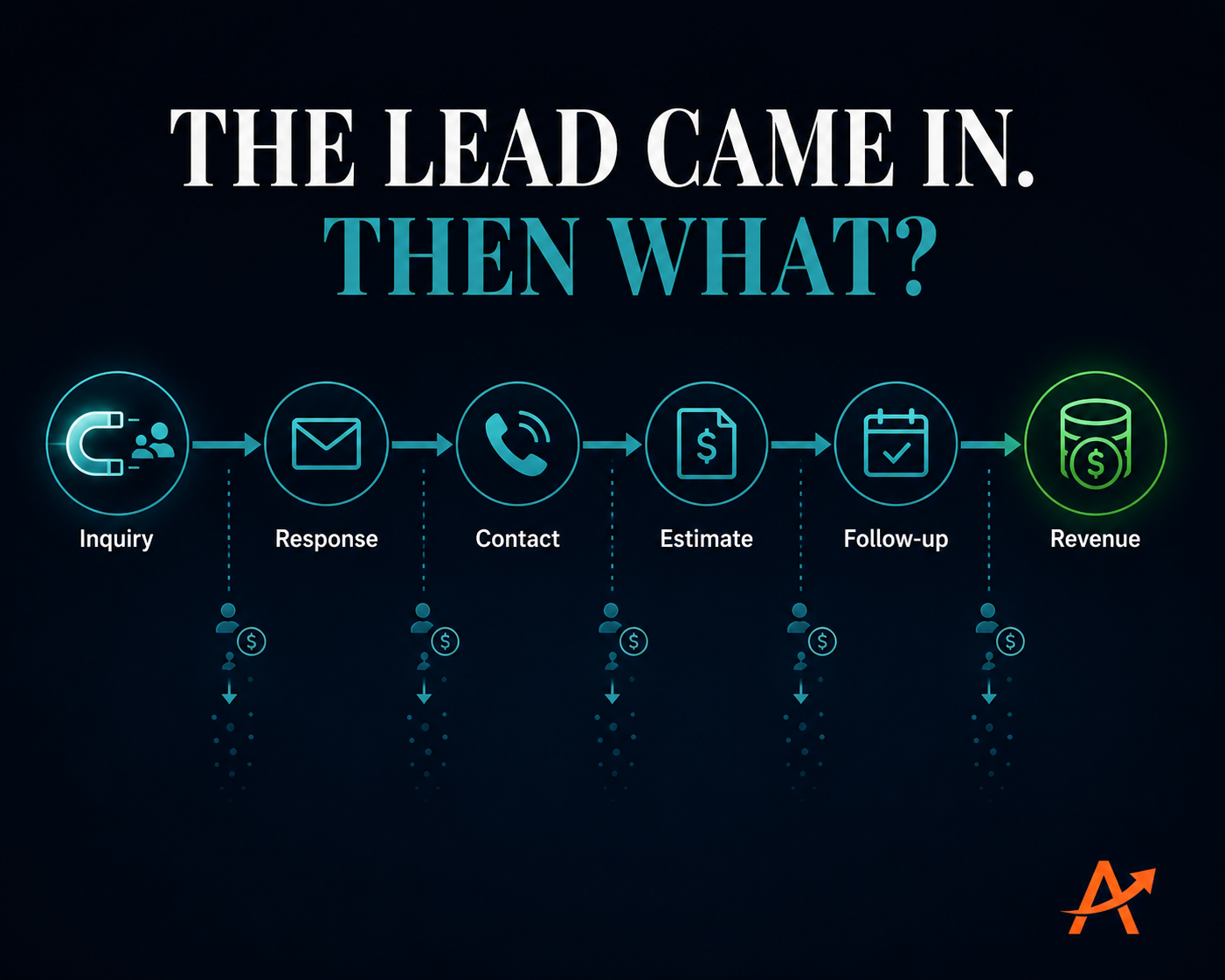
You don’t necessarily know what happened in between.
That middle is where revenue leaks hide.
Small Process Gaps Compound
One missed opportunity probably won’t change your month.
Repeated process failures can.
Suppose a team occasionally misses an inbound call. Another lead waits several hours for a response. An estimate gets sent without a follow-up task. Someone who said “call me next month” never gets called.
Each event looks insignificant by itself.
Together, they create systematic leakage.
The danger is that nothing appears obviously broken.
The phones still ring.
The sales team still sells.
Jobs still close.
Revenue still comes in.
So the business continues operating while opportunities quietly fall through gaps in the process.
That makes revenue leakage fundamentally different from a catastrophic failure.
The system can look like it’s working while still underperforming.
More Leads Can Make the Problem Bigger
This is where businesses can make an expensive mistake.
Revenue isn't growing fast enough, so marketing spend increases.
More traffic.
More paid ads.
More leads.
But if the existing response and conversion process is leaking opportunities, increasing lead volume doesn’t repair it.
It sends more opportunities through the same system.
Think about a bucket with holes in it.
You can turn up the faucet.
The bucket will receive more water.
But you haven't fixed the holes.
For service businesses, that can mean paying repeatedly to replace opportunities that should have had a better chance of converting the first time.
Before increasing demand, you need to understand how efficiently your business handles the demand it already generates.

Your CRM May Be Hiding the Evidence
There may already be clues inside your CRM.
Look at your open opportunities.
Old estimates.
“No response” leads.
Prospects who said they weren’t ready yet.
Appointments that never progressed.
Leads with no next action.
Opportunities sitting in the same pipeline stage for weeks.
Records nobody has touched in months.
Some are genuinely dead.
Some were never qualified.
But others may represent conversations that simply stopped.
That distinction matters.
A CRM full of contacts isn't automatically an asset.
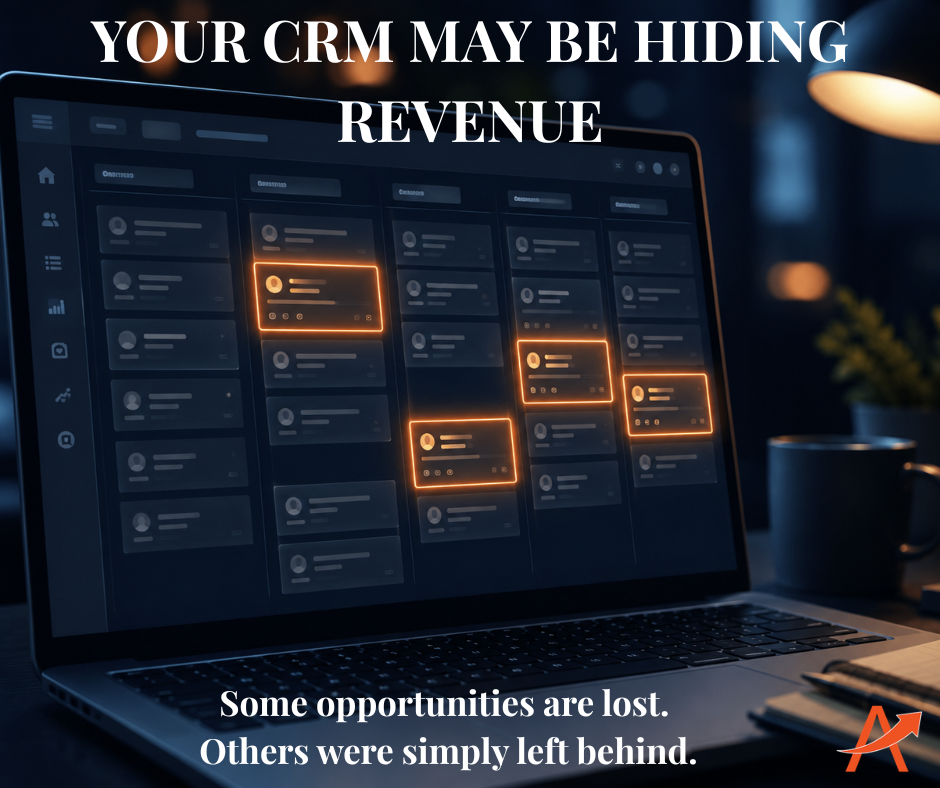
A CRM with disciplined follow-up and clear pipeline visibility can be.
If opportunities are entering your database faster than your team can consistently work, track, and close them, your database can become a record of unrealized demand.
You Need to Measure the Space Between Lead and Revenue
Most marketing reporting focuses heavily on acquisition.
Traffic.
Clicks.
Calls.
Forms.
Cost per lead.
Those metrics matter.
But they don’t answer the most important question:
What happened to the opportunity after it arrived?
That requires looking beyond marketing metrics and into response and conversion metrics.
Response time.
Contact rate.
Appointment rate.
Estimate rate.
Follow-up activity.
Close rate.
Lost reason.
Pipeline aging.
Those numbers tell you whether the business is simply generating activity or systematically converting demand into revenue.
That’s the difference between lead generation and Revenue Control™.
Find the Leak Before You Turn Up the Faucet
Not every business has a major revenue leak.
And not every unclosed lead could have become a customer.
The objective isn’t to pretend every opportunity was recoverable.
The objective is to identify where preventable losses repeatedly occur.
Because once you know where the process breaks, you can decide what actually needs fixing.
Maybe you need more leads.
Maybe you need faster response.
Maybe you need better follow-up.
Maybe your estimating process is the bottleneck.
Maybe old opportunities need to be reactivated.
But until you measure what happens between lead and revenue, you’re guessing.
And guessing gets expensive.
Do you know what happens to every lead after it enters your business? A Revenue Leak Audit™ examines the gaps between lead generation and booked revenue — including response time, follow-up consistency, pipeline visibility, stalled opportunities, and dormant leads — so you can see where potential revenue may be slipping through before spending more money generating demand.
Book Your Revenue Leak Audit™ →
Revenue Leak Audit