Why Estimates Go Cold
The estimate wasn’t the end of the sales process. It was the moment your follow-up mattered most.
You did the hard part.
The lead came in. Your team responded. You answered questions, scheduled the appointment, showed up, diagnosed the problem, discussed the project, built the estimate, and sent it over.
Then... nothing.
No approval. No rejection. No questions.
Just silence.
Most businesses treat that silence as an answer.
“They must have gone with someone else.”
“They probably thought we were too expensive.”
“They weren’t serious.”
Maybe.
But there’s another possibility that costs service businesses far more revenue than they realize:
The estimate didn’t lose. The follow-up did.
An unsigned estimate is not automatically a dead opportunity. In many cases, it’s a customer who got distracted, started comparing options, needed to talk to a spouse, wasn’t sure what to do next, had one unanswered question, or simply stopped feeling the urgency they felt when they originally contacted you.
The longer that gap lasts, the easier it becomes for the estimate to go cold.
And when that happens repeatedly, you don’t necessarily have a lead-generation problem.
You have a revenue leak.
What Does It Mean When an Estimate “Goes Cold”?
A cold estimate is an estimate that was delivered to a qualified prospect but never moved to a clear outcome.
They didn’t approve it.
They didn’t formally decline it.
They simply stopped moving.
That distinction matters.
Businesses often measure how many leads they generate and how many jobs they close, but they don’t always examine what happens between those two numbers.
That middle stage is where revenue quietly disappears.
If your business generates 100 opportunities, sends 60 estimates, and closes 25 jobs, the obvious question is:
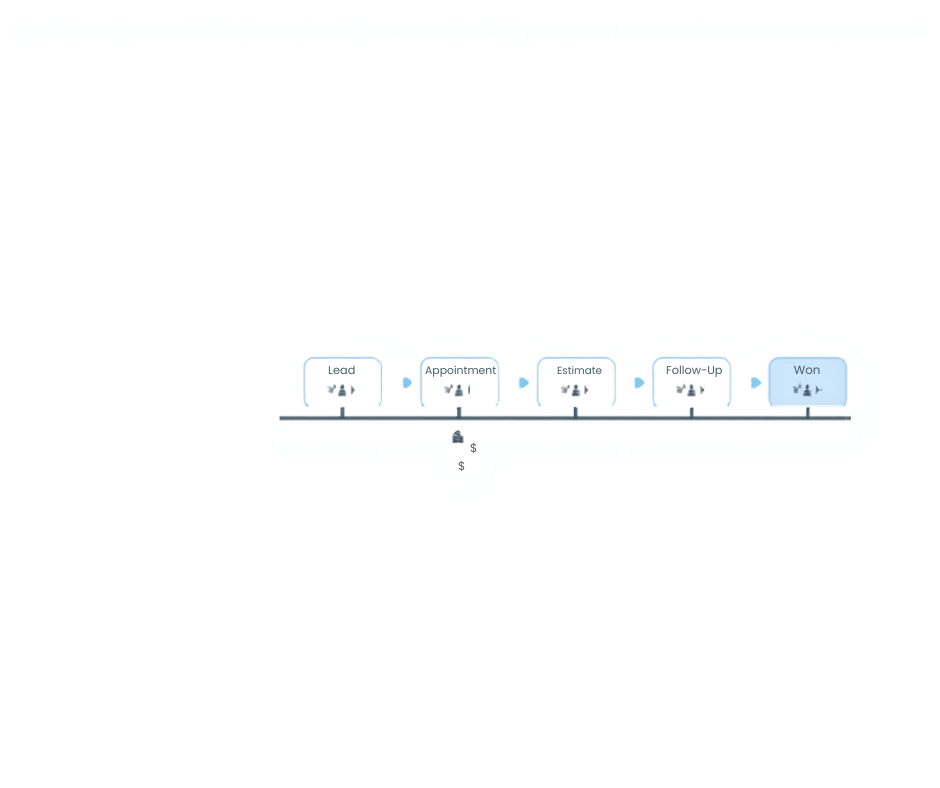
What happened to the other 35 estimates?
If the answer is essentially “we never heard back,” you have found a part of your sales process worth investigating.
Reason #1: Too Much Time Passes After the Estimate
Sales momentum has a shelf life.
When someone initially contacts your business, their problem is usually top of mind. They may be standing in front of a leaking pipe, looking at an outdated kitchen, worrying about a roof, dealing with a broken system, or finally preparing to move forward with a project they’ve delayed.
That creates urgency.
But urgency fades.
Every hour and every day between the conversation and the next meaningful interaction gives other priorities an opportunity to take over.
Research on lead response consistently shows how quickly buyer attention deteriorates. Inside Sales, for example, reports that conversion rates are significantly higher when businesses respond during the first five minutes of a lead interaction.
The exact timing after an estimate will vary by industry and project size, but the underlying principle is the same:
Momentum is easier to maintain than it is to recreate.
If your process becomes passive the second an estimate is sent, you’re asking the prospect to create the next step.
That’s a dangerous assumption.
Reason #2: “Estimate Sent” Becomes the Finish Line
For your team, sending the estimate may feel like completing a task.
For the customer, it often creates a new set of decisions.
Do I understand everything?
Is this the right option?
Is the price reasonable?
Should I get another estimate?
Can I afford this right now?
Do I need financing?
What happens after I approve it?
How soon can they start?
Your CRM might say Estimate Sent.
The customer’s brain says Decision Started.
Those are very different stages.
A strong sales process therefore doesn’t end when the estimate leaves your system. It defines what happens next.
Who follows up?
When?
By phone, email, or text?
How many attempts are made?
What happens when the prospect asks for more time?
When does an estimate become genuinely lost?
Without clear answers, follow-up becomes dependent on memory and individual effort.
And anything dependent on memory eventually becomes inconsistent.
Reason #3: The Estimate Creates Friction Instead of Removing It
An estimate shouldn’t simply tell someone what something costs.
It should help them make a decision.
That means clarity matters.
If an estimate contains confusing terminology, vague scope descriptions, unexplained options, unexpected charges, or no obvious next step, the customer has to do more mental work.
And when people aren’t sure what to do, they often do nothing.
Look at your estimate from the customer’s perspective.
Would they immediately understand what they’re buying?
Would they know what happens after they approve it?
Could they easily ask a question?
Could they approve the estimate from their phone?
If multiple options exist, would they understand the difference between them?
Your estimating software may produce a technically correct document while still producing a poor buying experience.
The goal isn’t simply to deliver information.
The goal is to reduce uncertainty.
Reason #4: Your Follow-Up Sounds Like a Follow-Up
There’s a message almost every prospect has received:
“Just following up on the estimate we sent. Let us know if you have any questions.”
It’s polite.
It’s also incredibly easy to ignore.
Why?
Because it gives the prospect nothing new to respond to.
Effective estimate follow-up should move the decision forward rather than simply remind someone that an estimate exists.
Instead of repeatedly asking whether they “had a chance to look at it,” your follow-up can uncover the actual obstacle.
Are they comparing options?
Is timing the problem?
Is there something in the scope they don’t understand?
Do they need financing information?
Are they waiting for another decision-maker?
Did the project simply fall down their priority list?
The purpose of follow-up isn’t to chase people.
It’s to make the next decision easier.
Reason #5: Nobody Owns the Estimate
Ask a simple operational question:
Who is responsible for an estimate after it is sent?
If the answer is vague, you probably have leakage.
Maybe the salesperson assumes the office will follow up.
The office assumes the salesperson owns it.
The owner remembers certain high-value estimates.
Everyone follows up when they have time.
Nobody follows the exact same process.
That produces an unpredictable customer experience.
A reliable follow-up system needs ownership.
Every open estimate should have a status, an owner, a next action, and a next-action date.
Otherwise, you don’t have a pipeline.
You have a list.
Reason #6: You Stop Too Soon
One unanswered message does not tell you why someone hasn’t bought.
Neither does two.
Customers have jobs, children, meetings, emergencies, vacations, competing projects, and dozens of notifications fighting for their attention.
Silence does not necessarily mean rejection.
Structured follow-up is therefore different from pestering someone.
Pestering means repeatedly sending the same low-value message.
Structured follow-up means communicating at intentional intervals, using appropriate channels, and giving the prospect a useful reason to respond.
For example, an estimate follow-up sequence might include an initial confirmation that the estimate was received, a question about the scope or options, a later check-in addressing a common concern, and eventually a message asking whether the project should remain open.
The point isn’t to follow up forever.
The point is to stop allowing opportunities to disappear accidentally.
Reason #7: You Don’t Know Why Estimates Are Being Lost
This may be the biggest problem.
If you mark every unclosed estimate as “lost,” you learn almost nothing.
Price.
Timing.
Competitor.
No response.
Financing.
Project canceled.
Not ready.
Scope changed.
Couldn’t reach customer.
These are completely different outcomes.
If 40% of your lost estimates are actually sitting in “no response,” that’s not necessarily evidence that your pricing is wrong.
It may be evidence that your follow-up system is weak.
If most losses happen because prospects choose competitors, you need to understand why.
If financing consistently kills larger projects, that points toward another issue.
Better loss data produces better decisions.
Without it, owners often solve the wrong problem.
They spend more on advertising because sales are down.
They lower prices because estimates aren’t closing.
They blame lead quality because prospects disappear.
Meanwhile, the real problem may be sitting inside the pipeline they already paid to create.

More Leads Won’t Fix a Leaky Sales Process
This is where the math gets uncomfortable.
Suppose you spend more money generating another 20 leads next month.
If your response time, estimating process, follow-up cadence, ownership, and close-rate problems remain unchanged, you’re pouring those new leads into the same system that lost the previous ones.
You may generate more opportunities.
You may also generate more waste.
Before asking:
“How do we get more leads?”
Ask:
“What happens to the leads we already have?”
That question can change where you invest.
Sometimes the fastest route to more revenue isn’t increasing traffic, leads, or ad spend.
It’s recovering more value from demand that already exists.
What a Healthy Estimate Follow-Up System Looks Like
A healthy system doesn’t rely on someone remembering to check the estimate list on Friday afternoon.
It has structure.
New estimates enter a defined pipeline. Customers receive confirmation. Follow-up happens according to a deliberate cadence. Team members know which opportunities they own. Conversations are documented. Lost opportunities receive meaningful loss reasons. Management can see how many estimates are open, how long they’ve been open, and where deals are stalling.
Automation can support that process, especially for confirmations, reminders, task creation, and routine communication.
But automation should support the customer experience rather than turn it into robotic spam.
The objective is simple:
No qualified opportunity should disappear because your business forgot to continue the conversation.
The Real Question Isn’t “Why Didn’t They Buy?”
When an estimate goes cold, businesses naturally focus on the customer.
Why didn’t they respond?
Why weren’t they ready?
Why did they choose someone else?
Those are reasonable questions.
But there’s another set of questions that produces much more useful answers:
How quickly did we follow up?
How many attempts did we make?
What channels did we use?
Did the customer understand the estimate?
Was there a clear next step?
Did anyone own the opportunity?
Did we record why it was lost?
Could management see that it was stalling before it disappeared?
Those questions shift the conversation from assumptions to systems.
And systems can be fixed.
Your next revenue opportunity may not require another campaign, another ad platform, or another hundred leads.
It may already be sitting in your CRM under:
Estimate Sent.
Stop Guessing Where the Revenue Went
Not sure how many estimates are quietly going cold inside your pipeline? A Revenue Leak Audit shows you exactly where leads and estimates are slipping through — response time, follow-up consistency, pipeline gaps, and opportunities that are quietly disappearing — so you can see what’s actually costing you revenue instead of guessing.